

























































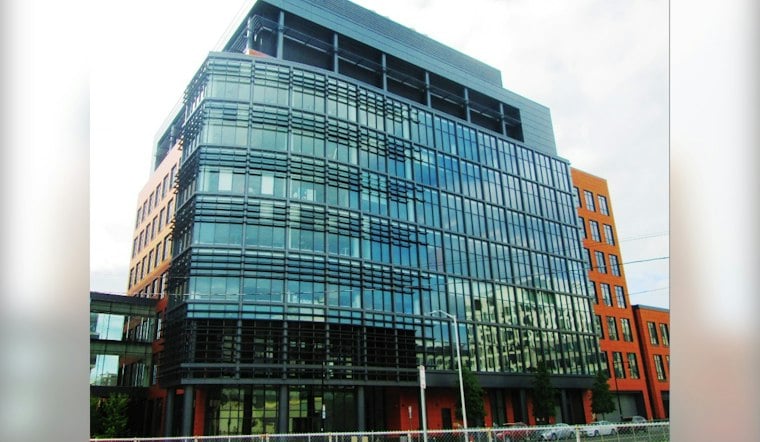
Kendall Square's biggest life-sciences incubator just opened a side door for the rest of the world. LabCentral officially launched The Loop on September 8, a global soft-landing initiative that kicked off its inaugural Loop Week Summit running from Monday through Friday this week, drawing representatives from more than 20 companies across 10 countries to Cambridge without a single one of them signing a lab lease.
A Four-Day Bridge Instead of a Corporate Move
The countries represented span Japan, South Korea, Denmark, Taiwan, the Czech Republic, Canada, India, Greece, Ireland and Hong Kong, according to PR Newswire. The premise is simple but a departure for LabCentral: instead of requiring international biotech startups to relocate or rent dedicated lab space in Kendall Square, The Loop lets them tap into the ecosystem's networking, investor access and market knowledge on a temporary, in-person basis. As The Harvard Crimson reports, the program includes an executive residency component that provides office space for two representatives per company for up to three months, giving founders a physical foothold in the ecosystem without a long-term commitment.
LabCentral President and CEO Maggie O'Toole framed the effort as a response to a tougher landscape for U.S. biotech, telling the Crimson that connecting founders and scientists worldwide is critical to advancing breakthroughs that reach patients. She pointed to constrained capital, visa restrictions and grant challenges as factors making international collaboration harder at a time when U.S. biotechnology is contending with federal funding cuts, industry layoffs and shifting policy regulations, per the same report. The Loop, in her telling, was created to directly address barriers to international collaboration and to increase collaborative activity centered in Massachusetts.
Seoul Sends Three Startups Into the Pipeline
One of the clearest signs of how the program is being adopted internationally: the Seoul Metropolitan Government partnered directly with LabCentral to send three South Korean biotech startups — Survivent Biologics, BioMe and SilicoPharm — into The Loop's inaugural four-day program, according to The Korea Times. The outlet reports that the selected companies specialize in oncology therapies, microbiome treatments for infectious diseases and AI-driven drug target discovery, giving the Seoul delegation a broad footprint across some of the hottest subsectors in biotech right now.
That kind of municipal-level sponsorship underscores how The Loop functions less like a typical incubator program and more like an aggregation point for national and civic biotech ambitions. The Loop Week Summit itself brings together in-person programming, networking and educational events, including sessions on U.S. market entry offered by Harvard Business School and events with investors, pharmaceutical partners and industry leaders, per the Crimson's reporting. LabCentral has also built in a day of programming meant to spotlight partner ecosystems abroad, along with dedicated mentoring aimed at sharpening participating companies' U.S. value propositions.
Why Now: A Squeezed Local Biotech Market
The timing is not incidental. Massachusetts biopharmaceutical companies raised $3.45 billion in venture capital in the first half of 2026, a 25% year-over-year increase, but average seed rounds fell nearly 40% to $4.6 million, according to MassBio's August Industry Snapshot as reported by Fierce Pharma. That divide — later-stage capital flowing while early-stage founders get squeezed — creates exactly the kind of funding hurdle that makes a lease-free entry point appealing to newcomers.
The labor market has also cooled. Massachusetts' biopharmaceutical workforce contracted by 3.1% in 2025, shedding roughly 3,600 jobs to fall to 113,503 employees, marking the first annual biopharma employment decline in nearly two decades of tracking by trade association MassBio, as reported by the Boston Business Journal. Meanwhile, commercial lab space sits largely empty: Greater Boston's life sciences lab vacancy rate climbed to 28.7%, with total space availability reaching 32.8% in the second quarter of 2026, prompting write-downs like Alexandria Real Estate Equities selling three Kendall Square lab floors back to Draper at a $75 million loss, as Hoodline previously reported. Takeda alone put nearly 450,000 square feet of Cambridge lab and office space up for sublease in February as it consolidated into a single 600,000-square-foot campus at 585 Third Street.
A Nonprofit Built on Public Money, Now Going Global
LabCentral is a nonprofit incubator for early-stage life-science companies that was founded in 2013, backed by two $5 million capital grants from the state-funded Massachusetts Life Sciences Center along with real estate support from MIT and founding corporate sponsors, according to the Massachusetts Life Sciences Center. The Crimson reports LabCentral now operates more than 200,000 square feet of commercial lab space across Kendall Square and Harvard's campus — a footprint that, per LabCentral's own figures, spans 243,000 square feet across six locations including three Main Street facilities, the Pagliuca Harvard Life Lab and the Blavatnik Harvard Life Lab.
O'Toole, who was LabCentral's first employee in 2013 and served as its chief operating officer before being named president and CEO effective May 1, 2025, succeeded co-founder Johannes Fruehauf, who transitioned to executive chairman. She previously oversaw strategic operations and physical site design across the network, giving her a hand in shaping the very infrastructure The Loop is now trying to extend beyond Kendall Square's physical walls. Companies incubated within LabCentral's network since 2013 have raised cumulative venture funding of $21.85 billion, created 7,915 life sciences jobs and launched 180 clinical trials across 344 supported startups, according to LabCentral's 12th annual impact report released in March.
The Loop marks LabCentral's first initiative explicitly built to attract international entrepreneurs, per the Crimson's reporting, and The Loop's own program description says it reduces regulatory hurdles and entry risks for companies trying to break into the U.S. market. O'Toole has also described a reciprocal vision for the effort, telling the Crimson she imagines U.S. founders eventually traveling overseas to deepen relationships and advance promising science abroad — turning a one-way soft landing into a two-way exchange.





